
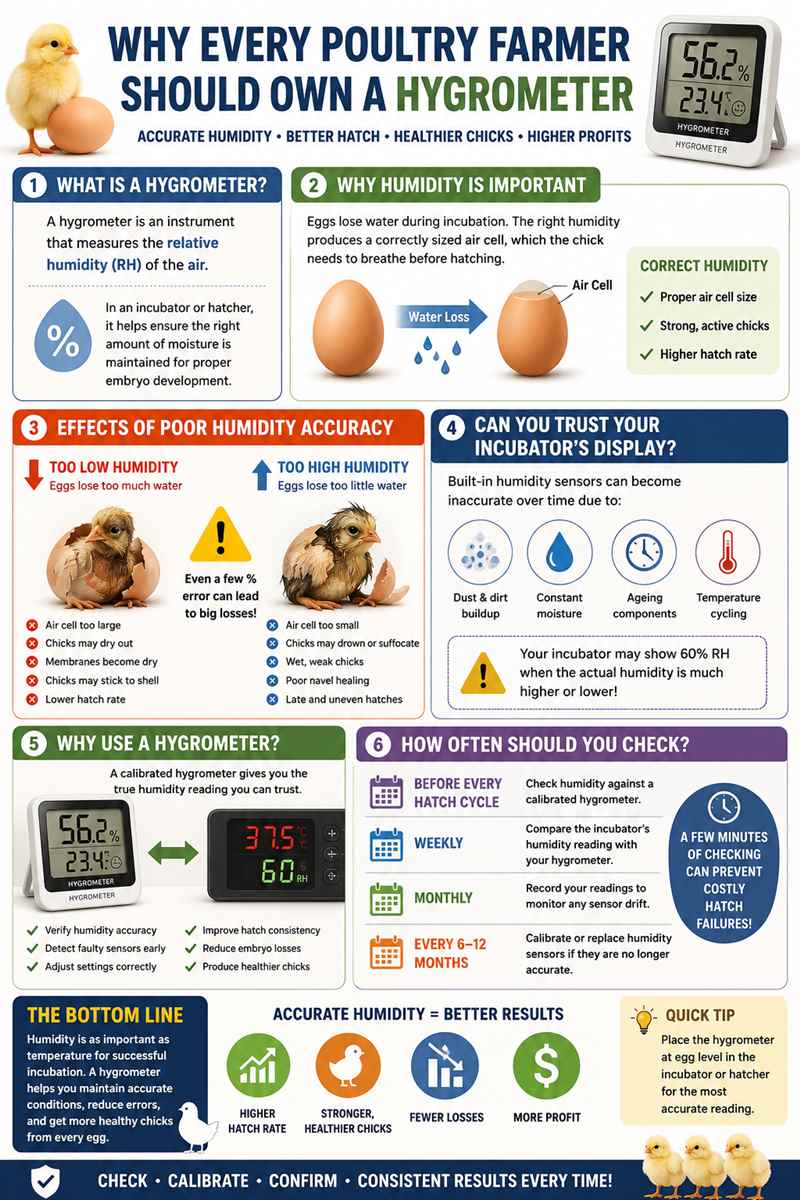
Did you know that a hygrometer and humidity is just as important as temperature when incubating fertile eggs?
Many poultry farmers carefully monitor their incubator temperature but overlook humidity accuracy—and this can be the difference between an excellent hatch and disappointing results.
What is a Hygrometer?
A hygrometer is an instrument that measures the relative humidity (RH) of the air. In an incubator or hatcher, it tells you how much moisture is present, helping ensure eggs lose the correct amount of water throughout incubation.
Why is Humidity So Important?
Developing embryos need the right humidity to form a properly sized air cell. During the last few days of incubation, chicks rely on this air cell to breathe before they hatch.
If humidity is incorrect, it can lead to:
❌ Sticky or dried-out chicks trapped in the shell
❌ Small or oversized air cells
❌ Weak chicks with poor vitality
❌ Late or uneven hatches
❌ Wet chicks and poorly healed navels
❌ Lower hatch rates and unnecessary financial losses
Even a humidity error of just a few percentage points can affect hundreds—or even thousands—of eggs over multiple hatch cycles.
Can You Trust Your Incubator’s Humidity Display?
Not always.
Built-in humidity sensors can gradually become inaccurate due to:
• Dust and dirt buildup
• Constant exposure to moisture
• Ageing electronic components
• Temperature cycling over time
This means your incubator could display 60% humidity when the actual humidity is much higher or lower.
Without checking it, you may never know why hatch results are declining.
Why Use a Hygrometer?
A calibrated hygrometer acts as your reference instrument. By comparing its reading with your incubator or hatcher display, you can:
✅ Verify humidity accuracy
✅ Detect faulty sensors early
✅ Adjust humidity settings correctly
✅ Improve hatch consistency
✅ Reduce embryo losses
✅ Produce healthier, stronger chicks
How Often Should You Check It?
For the best results:
???? Before every hatch cycle – Check humidity against a calibrated hygrometer.
???? Weekly – Compare the incubator’s humidity reading with your hygrometer.
???? Monthly – Record your readings to monitor any sensor drift.
???? Every 6–12 months – Calibrate or replace humidity sensors if they no longer measure accurately.
Regular checks only take a few minutes but can prevent costly hatch failures.
The Bottom Line
A hygrometer is one of the most valuable yet affordable tools in any hatchery. It helps ensure your incubator or hatcher is operating with accurate humidity, reducing avoidable errors that affect embryo development and hatchability.
Don’t leave your hatch results to chance. Verify your humidity, calibrate your equipment regularly, and give every chick the best possible start.
???? Have you ever checked your incubator’s humidity with an independent hygrometer? Share your experience in the comments—we’d love to hear from you!
#PoultryFarming #Incubation #Hatchery #Hygrometer #Humidity #EggIncubation #BroilerFarming #LayerFarming #HatchRate #PoultryEquipment #Incubator #Hatcher #FarmTips #PoultrySuccess