
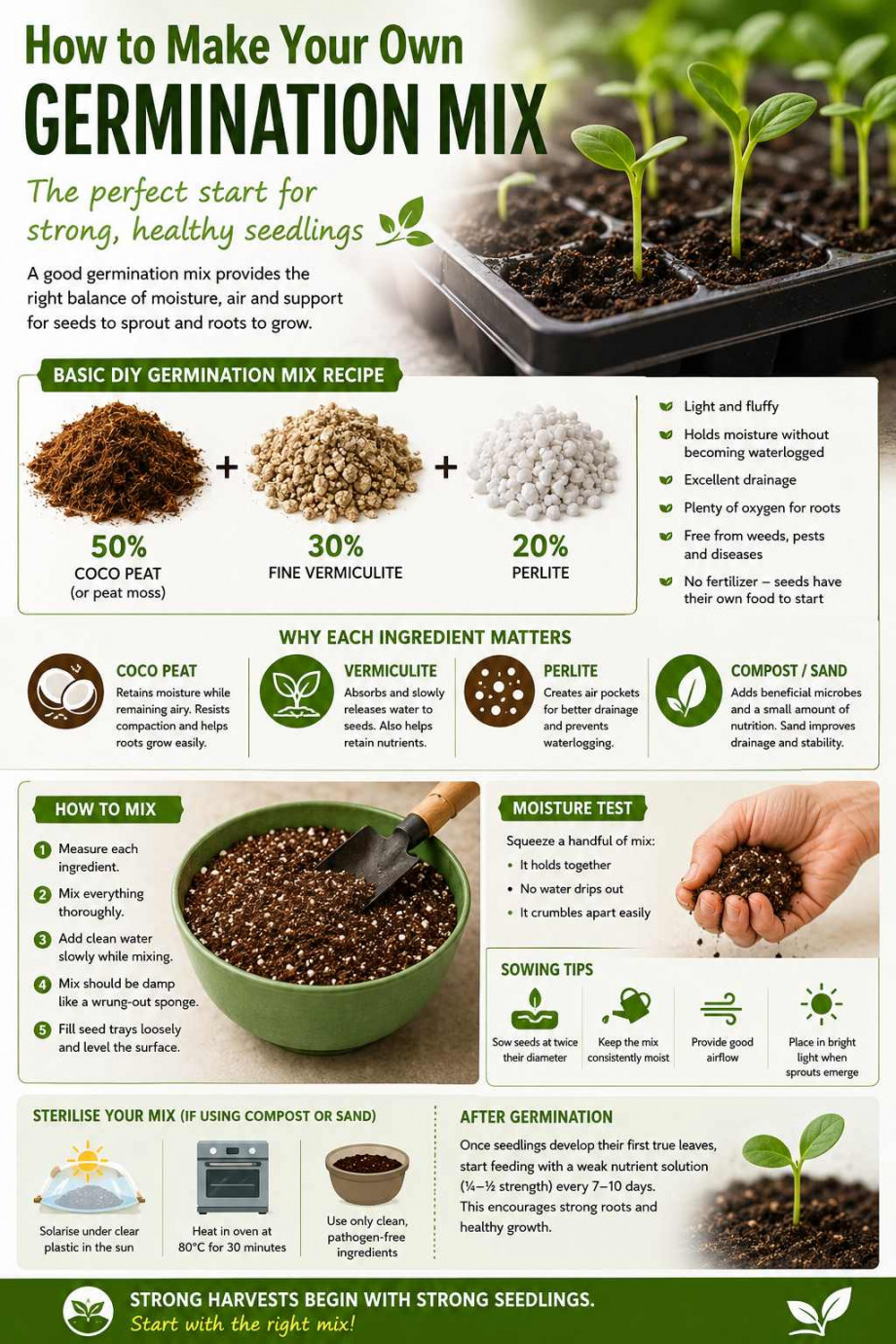
Whether you’re growing vegetables, herbs, flowers, or trees, successful gardening starts with healthy seedlings. One of the biggest factors influencing germination is the quality of your growing medium. A good germination mix provides the perfect balance of moisture, air, and support for young roots.
The good news is that you don’t need to buy expensive commercial seed-starting mixes. With a few readily available ingredients, you can make your own high-quality germination mix at home.
What Makes a Good Germination Mix?
A quality germination mix should:
- Be light and fluffy
- Hold enough moisture without becoming waterlogged
- Provide excellent drainage
- Allow plenty of oxygen around developing roots
- Be free from weeds, pests, and diseases
- Have a fine texture for good seed-to-soil contact
Unlike potting soil, a germination mix contains very little or no fertilizer because young seedlings initially rely on the nutrients stored inside the seed.
Basic DIY Germination Mix Recipe
Ingredients
- 50% coco peat (or peat moss)
- 30% fine vermiculite
- 20% perlite
This combination creates an ideal balance between moisture retention and drainage, giving seeds the best environment to germinate.
Alternative Budget Mix
If perlite or vermiculite isn’t available, you can use:
- 60% coco peat
- 30% fine compost (well-screened and fully matured)
- 10% clean river sand
Although this mix works well, it is slightly heavier and should only use mature compost to reduce the risk of diseases.
Why Each Ingredient Matters
Coco Peat
Coco peat is made from coconut husks and is excellent for retaining moisture while remaining airy. It also resists compaction, allowing roots to develop easily.
Vermiculite
Vermiculite acts like a sponge, absorbing and slowly releasing water to the seeds. It also helps retain nutrients once seedlings begin feeding.
Perlite
Perlite is a lightweight volcanic material that creates air pockets throughout the mix, improving drainage and preventing root rot.
Compost (Optional)
Well-matured compost introduces beneficial microorganisms and small amounts of nutrients. However, it should be finely screened and free from pathogens.
River Sand
Clean river sand improves drainage and adds weight to the mix, helping keep seed trays stable.
How to Mix
- Measure each ingredient accurately.
- Place all ingredients in a large container or wheelbarrow.
- Mix thoroughly until evenly blended.
- Add clean water slowly while mixing until the mix feels damp but not wet.
- Fill seed trays loosely without compressing the mix.
- Lightly level the surface before sowing seeds.
Moisture Test
The mix should feel like a wrung-out sponge.
When squeezed in your hand:
- It should hold together.
- No water should drip out.
- It should crumble apart easily when touched.
Too much water reduces oxygen around the seed and can cause damping-off diseases.
Sterilising Your Mix
If you’re using compost or sand from outside, sterilising can reduce disease pressure.
Options include:
- Solarising in clear plastic under the sun.
- Heating small batches in an oven at around 80°C for 30 minutes.
- Using only clean, pathogen-free ingredients.
Sowing Tips
- Sow seeds at a depth of approximately twice their diameter.
- Keep the mix consistently moist.
- Avoid overwatering.
- Maintain good airflow around seedlings.
- Place trays in bright light as soon as seeds emerge.
Feeding Seedlings
Once seedlings develop their first true leaves, begin feeding with a weak nutrient solution (about one-quarter to one-half strength) every 7–10 days. This encourages healthy root development and vigorous growth.
Common Mistakes
Avoid these common errors:
- Using ordinary garden soil.
- Overwatering the trays.
- Compacting the growing medium.
- Using fresh manure or unfinished compost.
- Allowing the mix to dry out completely after sowing.
Final Thoughts
A well-made germination mix is one of the best investments you can make in your garden. Healthy seedlings establish faster, suffer fewer diseases, and ultimately produce stronger, more productive plants.
By making your own germination mix, you can save money, control the quality of your growing medium, and tailor it to the crops you grow. Whether you’re producing a few trays for your home garden or thousands of seedlings for commercial production, the right mix lays the foundation for a successful growing season.
Remember: strong harvests begin with strong seedlings—and strong seedlings begin with the right germination mix.