
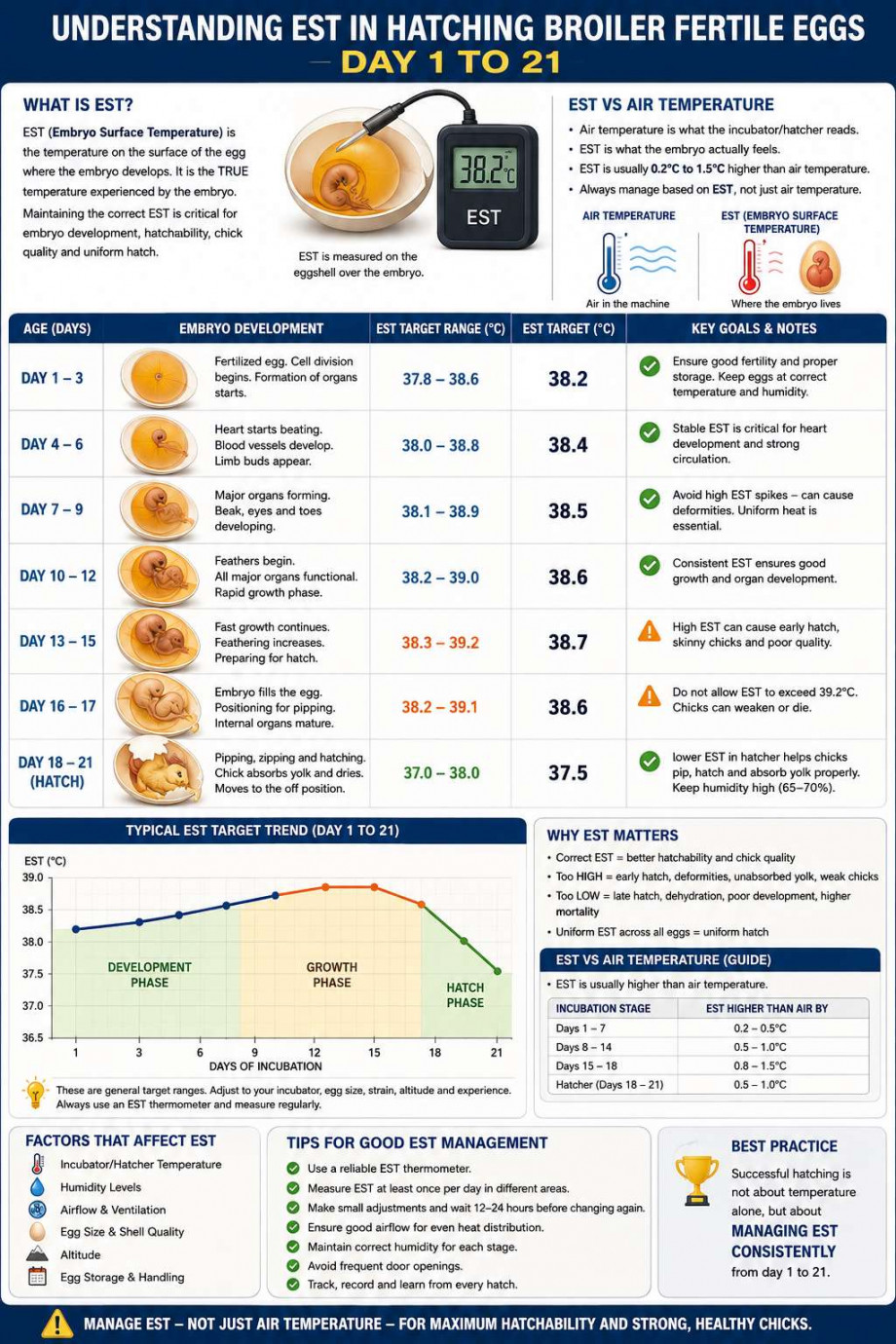
Many poultry farmers focus on incubator air temperature, but the most important temperature in the incubator is actually the Egg Shell Temperature (EST). This is the temperature the developing embryo experiences, and it has a huge impact on hatchability, chick quality, and the future growth of your broilers.
What is EST?
Egg Shell Temperature (EST) is the temperature measured directly on the surface of the eggshell. As embryos grow, they produce their own heat. During the second half of incubation, this metabolic heat increases rapidly, making EST a much better indicator of embryo health than air temperature alone.
 The ideal EST for broiler eggs is approximately 37.8–38.1°C.
Why is EST so Important?
A correct EST helps produce:
 Higher hatchability
Strong, active day-old chicks
Good yolk absorption
Well-healed navels
Uniform chick size
Better feed conversion
Faster growth to market weight
Lower first-week mortality
Healthy embryos become healthy broilers.
What Happens if EST is Too High?
When EST stays above 38.5°C, embryos begin to overheat.
This can result in:
 Chicks failing to reach the air cell
Weak chicks with poor vitality
Early hatching
Poor navel closure
Sticky or dehydrated chicks
Increased late dead-in-shell embryos
Lower hatchability
Poor broiler growth after placement
Temperatures approaching 39–40°C for extended periods can significantly reduce both hatchability and chick quality.
What Happens if EST is Too Low?
If EST is too low, embryo development slows down.
Possible signs include:
Delayed hatch
Weak chicks
Poor yolk absorption
Large residual yolk sacs
Wide hatch window
Increased late embryo mortality
Even if these chicks hatch, they often struggle during the first week of life.
Common Causes of Incorrect EST
High or low EST is often caused by:
 Poor air circulation inside the incubator
Insufficient fresh-air ventilation
Incorrect incubator temperature settings
High room temperatures
Overloaded incubators
Concentrating older eggs in one area of a multistage machine
Uneven airflow creating hot or cold spots
Measure the Embryo, Not Just the Air
One of the biggest mistakes hatcheries make is relying only on the incubator’s air temperature.
The embryo is what matters.
By regularly monitoring Egg Shell Temperature—especially from day 10 onward—you can identify overheating or underheating before it affects your hatch.
A small adjustment in ventilation, airflow, or incubator settings can make a big difference in hatchability and chick performance.
 Remember: Great broilers start with great incubation. Keep your EST in the target range, and you’ll give every chick the best possible start in life.
#PoultryFarming#BroilerProduction#HatcheryManagement#Incubation#EggShellTemperature#EST#Ross308#DayOldChicks#Hatchability