
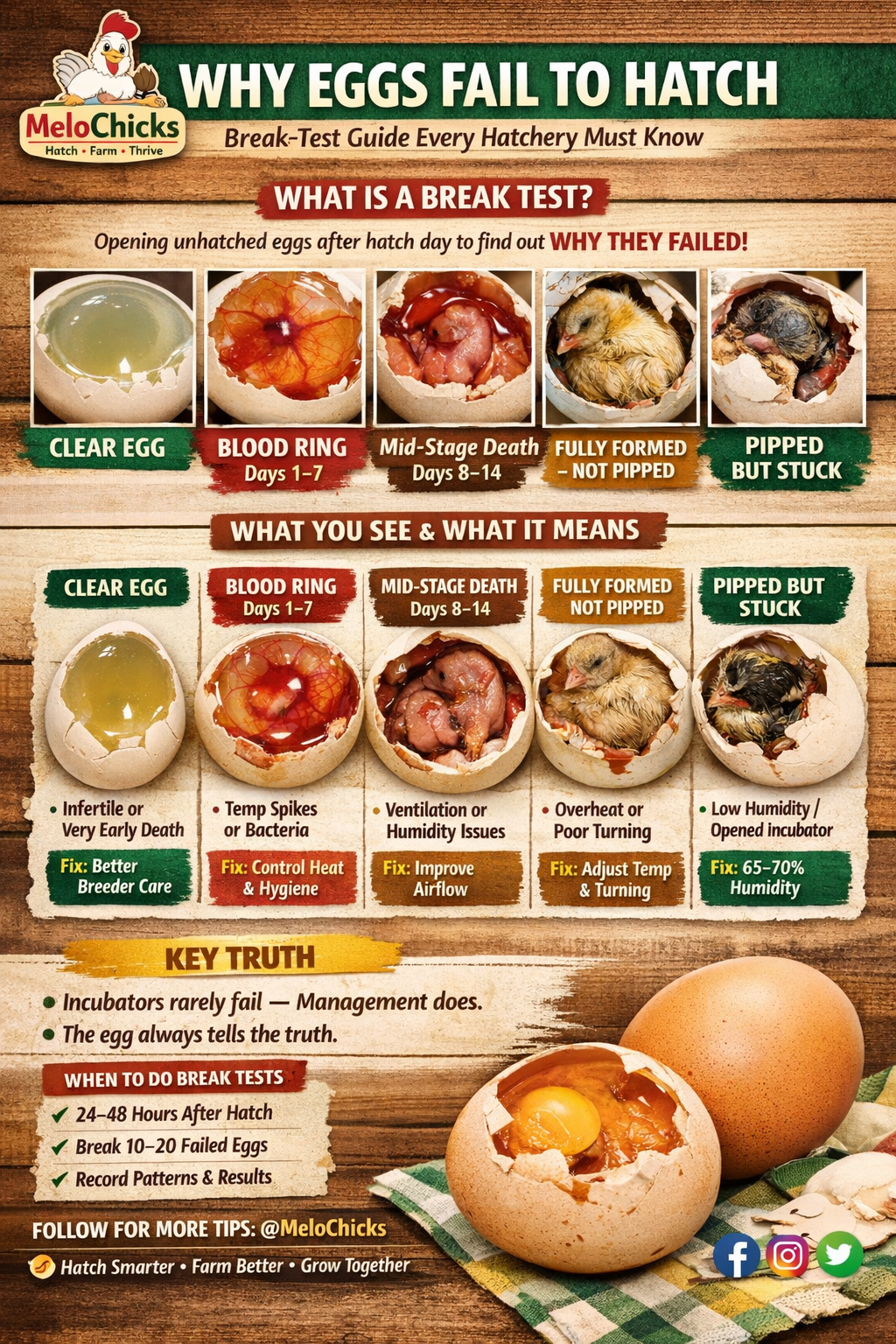
A break test involves carefully opening unhatched eggs after hatch day and examining what’s inside. The embryo’s development stage and condition tell you where the problem occurred—before incubation, during early growth, late incubation, or at hatch.
???? Tools You’ll Need
- Disposable gloves
- Paper towels
- Small knife or spoon
- Notebook / phone for notes & photos
- Trash bag or sealed container
- Optional: magnifying glass
⚠️ Hygiene is critical – failed eggs can carry bacteria.
⏱️ When to Do Break Tests
- 24–48 hours after hatch window closes
- Incubator should be off and cooled
- Separate eggs into:
- Never pipped
- Internally pipped
- Externally pipped but not hatched
???? Step-by-Step Break Test Method
1️⃣ Open the Egg Correctly
- Crack the large (air cell) end first
- Peel shell slowly—don’t pull the embryo out
- Observe before touching anything
???? What to Look For (And What It Means)
❌ 1. Clear Egg (No Embryo)
What you see
- Completely clear
- No blood vessels
- No smell
Cause
- Infertile egg
- Dead embryo at day 0–1
- Poor breeder nutrition or mating issues
???? Action
- Check rooster-to-hen ratio
- Improve breeder nutrition
- Review egg storage (temp <20 °C, turned daily)
❌ 2. Blood Ring (Early Death: Days 1–7)
What you see
- Red ring on yolk
- Tiny dark spot
- No structure
Cause
- Temperature spikes
- Rough egg handling
- Poor egg storage
- Bacterial contamination
???? Action
- Stabilise incubator temp
- Disinfect incubator & trays
- Improve egg handling hygiene
❌ 3. Small Embryo With Veins (Mid Death: Days 8–14)
What you see
- Visible embryo
- Feathers not fully formed
- Cloudy fluid
Cause
- Incorrect humidity
- Poor ventilation
- Nutritional deficiencies in breeders
???? Action
- Check ventilation openings
- Ensure steady humidity (not fluctuating)
- Improve breeder feed quality
❌ 4. Fully Formed Chick, Not Pipped (Late Death: Days 15–18)
What you see
- Fully feathered chick
- Yolk partially absorbed
- Head often between thighs
Cause
- Low oxygen
- Incorrect turning
- Overheating
???? Action
- Improve airflow
- Confirm turning angle & frequency
- Avoid temps above 37.8 °C
❌ 5. Internally Pipped but Dead
What you see
- Beak inside air cell
- Chick died before breaking shell
Cause
- Low humidity at lockdown
- Weak chicks (breeder nutrition)
???? Action
- Increase lockdown humidity (65–70%)
- Improve breeder mineral & vitamin balance
❌ 6. Externally Pipped but Not Hatched
What you see
- Hole in shell
- Dried or stuck chick
- Shrink-wrapped membrane
Cause
- Low humidity
- Opening incubator during lockdown
???? Action
- Do not open incubator during hatch
- Maintain stable high humidity
???? Key Patterns to Watch
| Pattern | Likely Issue |
|---|---|
| Many clears | Fertility problem |
| Early deaths | Temperature & handling |
| Mid deaths | Ventilation & nutrition |
| Late deaths | Heat, oxygen, turning |
| Pipped & stuck | Humidity management |
???? Best Practice Tips
- Break at least 10–20 failed eggs for accuracy
- Keep records per hatch (date, settings, results)
- Compare patterns across multiple hatches
- Don’t judge from 1–2 eggs only